





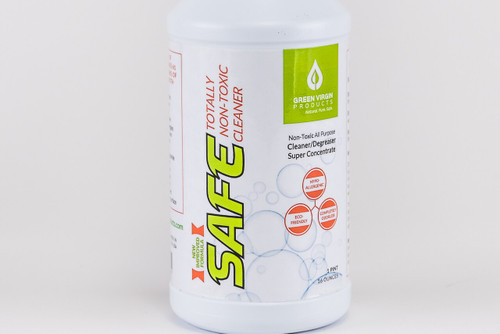


This 1 Quart of "SAFE" will make 122 sixteen ounce bottles of light duty Non-Toxic Cleaner, at a cost of only $.79 cents each.
What is "SAFE", Non-Toxic All Purpose Cleaner, Super Concentrate?
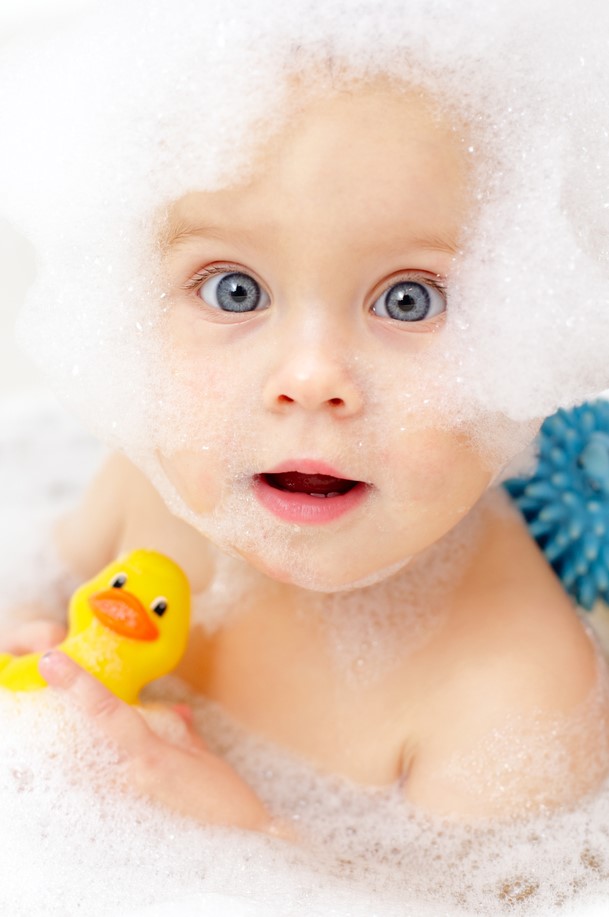
Green Virgin Products all new "SAFE" represents an amazing breakthrough in cleaning technology. It is completely non-toxic to humans and pets except insects. It is a totally non-toxic cleaner and will not harm the environment in any way. People that are chemically sensitive or allergic to everything actually bathe in this cleaner. All the ingredients are rendered completely inert due to the colloidal cooking process, yet it can tackle even the toughest jobs and it will work as well or better than toxic cleaners.
When diluted 60 parts water to 1 part "SAFE", it kills over 99.99% of Staph, Strep, E Coli, Salmonella, Pseudomonas, Yeast and Mold. It even kills insects. How can it be non-toxic and kill insects?
"SAFE" is a powerful degreaser. It dissolves grease and oil. Humans and pets are water based. Insects mouth parts are oil based. By law we can't say it's an insecticide because insecticides must contain poisons. See a bug in the baby's room just spray it and don't worry about any toxic fumes or residue. Insecticides are one of the most dangerous chemicals available to consumers. Dispose of them ASAP.
Complete Users Guide
New "SAFE" is actually way more concentrated than our old GVP Formula 433.
"SAFE" is 6 times more concentrated than our old cleaner. New "SAFE" is recommended to be diluted 60 to 1 for light cleaning. GVP Formula 433 was only 10 to 1 for light cleaning.
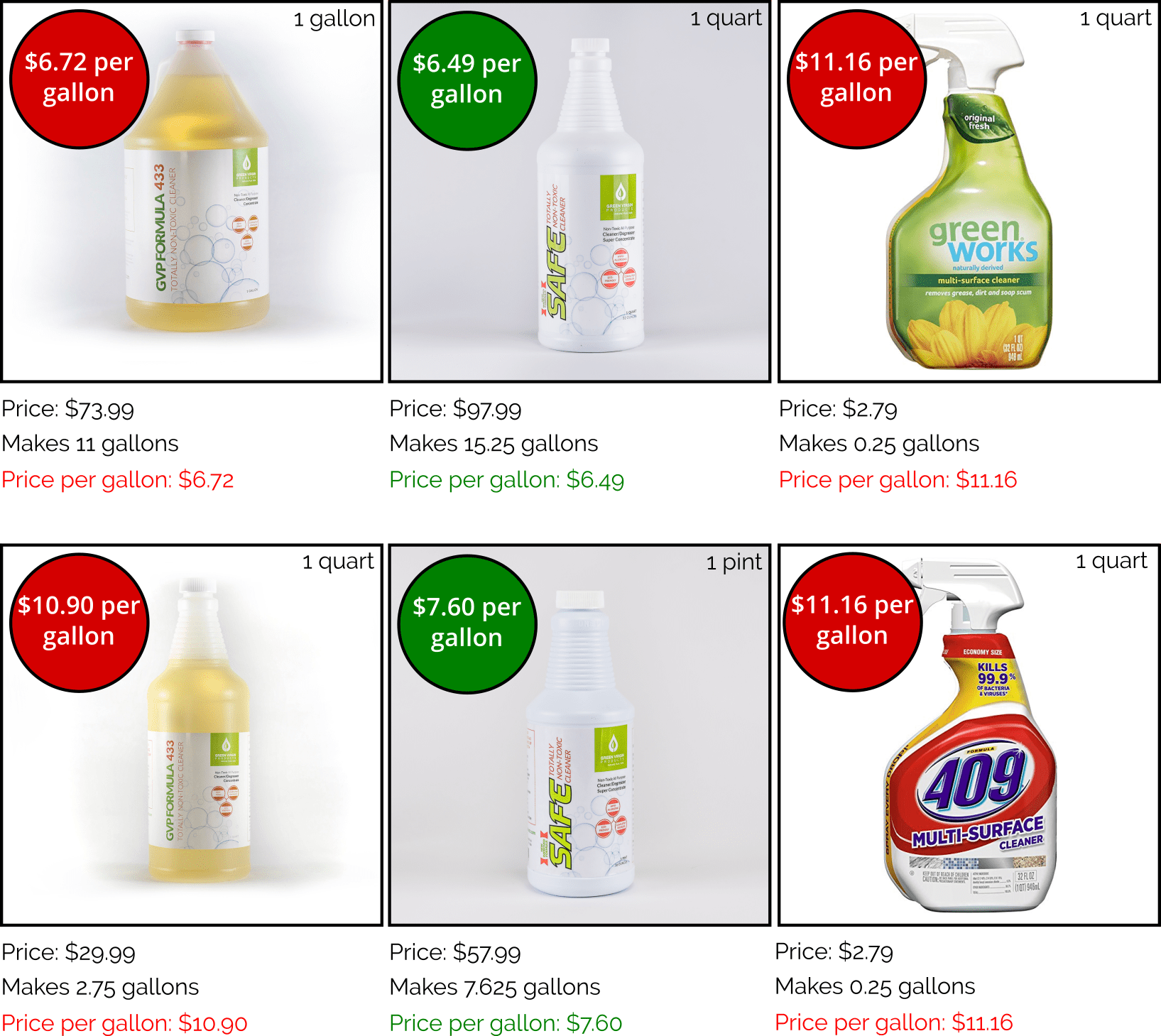
New "SAFE" actually costs less than GVP Formula 433 and the TOXIC brands sold in the supermarket!
Lets analyze the cost of new "SAFE" compared to our old GVP Formula 433.
Could I be allergic to Safe?
It would be very unlikely you could be allergic to Safe as the manufacturing process turns all the ingredients inert. That is why even people who are chemically sensitive and have severe allergies can bathe with this product.
What is in "SAFE", Non-Toxic Cleaner?
 The Ingredients are; Alkanoamines, amino acids, corn oil, non-ionic surfactants, and plant based fatty acids organic alcohol (the alcohol all evaporates during the cooking process), in a base of colloidal micelles. All ingredients are grown and processed in the USA. All ingredients are on the EPA's "Generally Recognized As Safe," list. This product does not contain any SLS (Sodium Lauryl Sulfate) or anything similar to SLS. To see a list of toxic chemicals that are not in "SAFE" but are in the products sold in the grocery store click here.
"SAFE" is made using a proprietary process that results in the molecules of "SAFE" being about 10,000 times smaller than an oil, grease or dirt molecule. Every one of the "SAFE" molecules also carries a powerful electrical charge with a positive and negative charge on each molecule like a tiny magnet. These grease loving and grease hating charges are able to surround the dirt because of their tiny size and break it up unlike any cleaner before.
So instead of using powerful and toxic chemicals and solvents to clean, use "SAFE" and clean the healthy, eco-friendly way. It is the best and safest all purpose cleaner ever invented.
Does "SAFE", Non-Toxic Cleaner Cost As Much As The Toxic Brands?

Since this product will replace almost all the toxic chemicals in your home, you will see a large savings. Imagine one product that will replace many products depending on dilution. The quart will dilute out to over $400 worth of other cleaning products. No more buying tub & tile cleaner, floor cleaner, toilet, window, oven, countertops, hand soap, dish soap, automatic dish detergent, laundry pre-spotter, carpet shampoo, and hundreds of other uses. See the user guide at the bottom of this page for directions for hundreds of cleaning jobs.
These are high-quality bottles with sprayers and will last decades. You only need to buy the spray bottles the first time. You just refill and reuse them over and over. This 1 Quart of "SAFE" will make 122 sixteen ounce bottles of light duty Non-Toxic Cleaner, at a cost of only $.79 cents each. If we had mixed it up for you like is done with the cleaners for sale in the supermarket, you would have paid over $700 extra just in shipping. Don't pay to ship water when you can add it yourself when the concentrate arrives. The Earth will thank you. If you have bottles from the GVP Formula 433, they will still work fine with "SAFE". Just remember the follow the directions on the new bottle and not the old bottles.
How Do I use "SAFE" Non-Toxic Cleaner?
We only sell "SAFE" in its concentrated state. That is our secret to being able to sell such an advanced product and save you money at the same time. You will add about 60 quarts of your water to this quart of concentrate. Imagine if we had mixed this product with our water. You would have to pay for shipping on 60 extra quarts, about $700. Plus about 60 empty bottles and sprayers that would end up in landfills. We recommend you get the mixing bottles on your first order. These mixing bottles are also labeled with the most common cleaning jobs with directions. Highly recommended is a foaming pump bottle which works great for hand washing, (you should order 1 for each sink in the house) and shower soap if your chemically sensitive.
Complete Users Guide
What Health Hazards Can I Help Avoid By Using "SAFE"?
The leading cause of poisonings in the USA are from Household cleaning chemicals. The risk of developing asthma is increased by nearly fifty percent by the use of toxic household cleaners with spray bottles. The most accidental poisonings of all the household cleaning products were from dishwasher detergent. Dish detergents leave a toxic residue on your dishes when they come out of the dishwasher. Almost every all-purpose cleaner, floor cleaner, tub & tile cleaners etc contain many known carcinogens.
In 1942 only about 8,000 people a year died of cancer. In 2012 8.2 million people died of cancer and that number is growing at a fast rate. Household cleaning products are known to cause cancer, asthma and other respiratory illnesses, chemical burns, headaches, birth defects, poisonings, allergies,reproductive and developmental toxicity, changes in sexual behavior, decreases in fertility, menstrual changes, changes in the onset of puberty, miscarriage, premature birth and even death. Cleaning products were responsible for nearly 10 percent of all toxic exposures reported to U.S. Poison Control Centers in 2000, accounting for 206,636 calls. Of these, nearly two-thirds involved children under six, who can swallow or spill cleaners stored or left open inside the home.
Up to 90% of all Childhood Cancers Could be Caused by Toxic Chemicals!
"A panel of experts in 2003 concluded that genetic predisposition accounts for no more than 20 percent of all childhood cancers and that environmental causes could account for 5 - 90 percent, depending on the type of cancer," said Richard Clapp, professor of environmental health at the BU's School of Public Health. "The good news is that these high rates of childhood cancer are not inevitable, and that we can prevent childhood cancer by removing toxic chemicals and other environmental hazards and take steps to better protect our children."
According to the U.S. Environmental Protection Agency, the air inside the typical home is on average 2-5 times more polluted than the air just outside and in extreme cases 100 times more contaminated largely because of household cleaners and pesticides. In a 2002 U.S. Geological Survey study of contaminants in U.S. stream water, 69 percent of streams sampled contained persistent detergent metabolites, and 66 percent contained disinfectants. "SAFE" contains absolutely zero toxic chemicals: Click here to see a list of the toxic chemicals contained in the toxic products sold in grocery stores and the health problems they can cause.
Hand Sanitizers And Antibacterial Soaps, Stop Using Them Immediately.
IMPORTANT UPDATE ON TRICLOSAN: Triclosan, the antibacterial agent commonly found in hand sanitizers, antibacterial soaps, lotions, acne products, cosmetics and other personal care products is dangerous! It is classified as a pesticide by the EPA and as a drug by the FDA. The EPA considers it a major risk to human health and to the environment. Using antibacterial products leads to super bugs, germs and bacteria that are resistant to antibiotics like MRSA. "Chemically triclosan is almost the same as some of the most toxic chemicals on earth: dioxins, PCB's, and Agent Orange. Its manufacturing process may produce dioxin, a powerful hormone-disrupting chemical with toxic effects in the parts per trillion (one drop in 300 Olympic-sized swimming pools!)." If you use any products containing triclosan, my advice to you is to stop using them immediately and throw them away. The stuff is THAT dangerous. - from Dr. Christine H. Farlow Recent studies have shown that plain soap and water kills germs just as effectively as antibacterial soaps. In fact, they found no benefit to using antibacterial soaps at all. And using antibacterial products leads to germs that are resistant to antibiotics and become superbugs like MRSA. "SAFE" Non-Toxic Cleaner kills over 99% of germs!
Is Water Pollution Really A Problem?
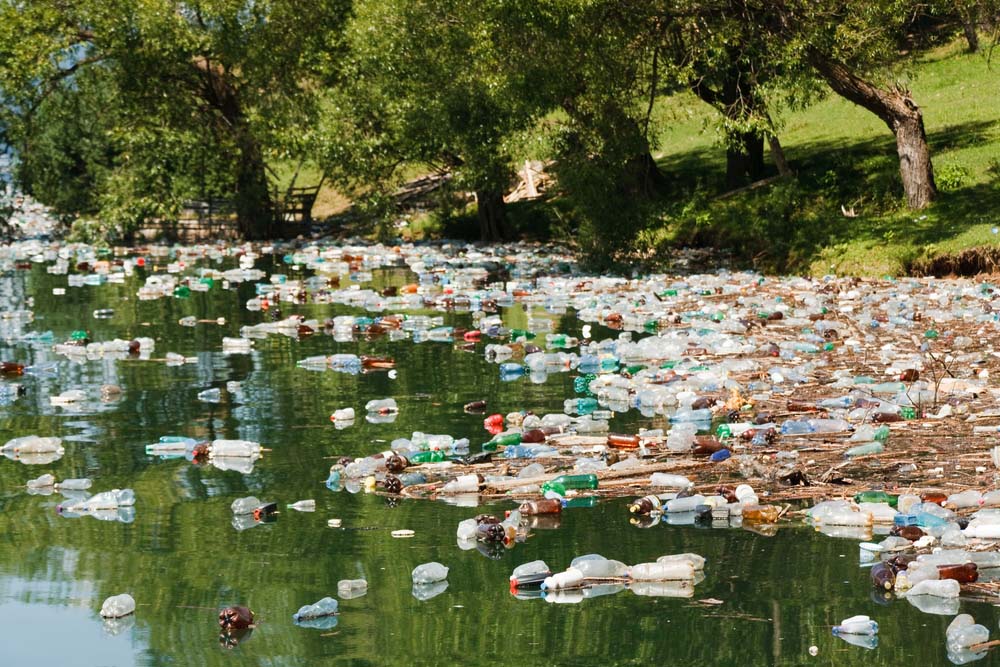 Did you know that over 40% of American rivers and 46% of American lakes are too polluted for fishing, swimming or aquatic life. In any given year, about 25% of the beaches in the USA are under advisories or closed at least once because of water pollution. There is a dead zone in the Gulf of Mexico at the mouth of the Mississippi river where there is no sea life. It measures about 7,722 square miles. We can help reverse this trend by using non-toxic products like Green Virgin Products Soap Nuts and "SAFE" non-toxic Cleaner.
-A plastic bottle takes over 1 million years to decompose. -Americans use 2.5 million plastic bottles every HOUR. -Plastic bags and other plastic garbage thrown into the ocean kill as many as 1 million sea creatures every year. -Americans generate 11 million tons of plastic waste a year but recycle only 1 or 2% of it. -Fourteen billion pounds of trash, much of it plastic is dumped in the world's oceans every year. -The fishing industry dumps an estimated 150,000 tons of plastic into the ocean each year, including packaging, plastic nets, lines, and buoys. -Every year we make enough plastic film to cover the state of Texas. -Nearly every piece of plastic EVER made still exists today. -With "SAFE" you reuse the plastic spray bottles over and over, greatly reducing the amount of plastic in our landfills and saves you money. Now there is no need to expose ourselves and our families to highly toxic chemicals. "SAFE" is totally non toxic, odorless, will save you a lot of money, is an amazingly effective cleaner, and is totally eco friendly. For a healthy, happy family use "SAFE". To see the complete user guide with complete cleaning directions and hundreds of suggested uses click below.
Complete User Guide
Click below to see the MSDS sheet for "SAFE" MSDS Sheet for "SAFE"
